
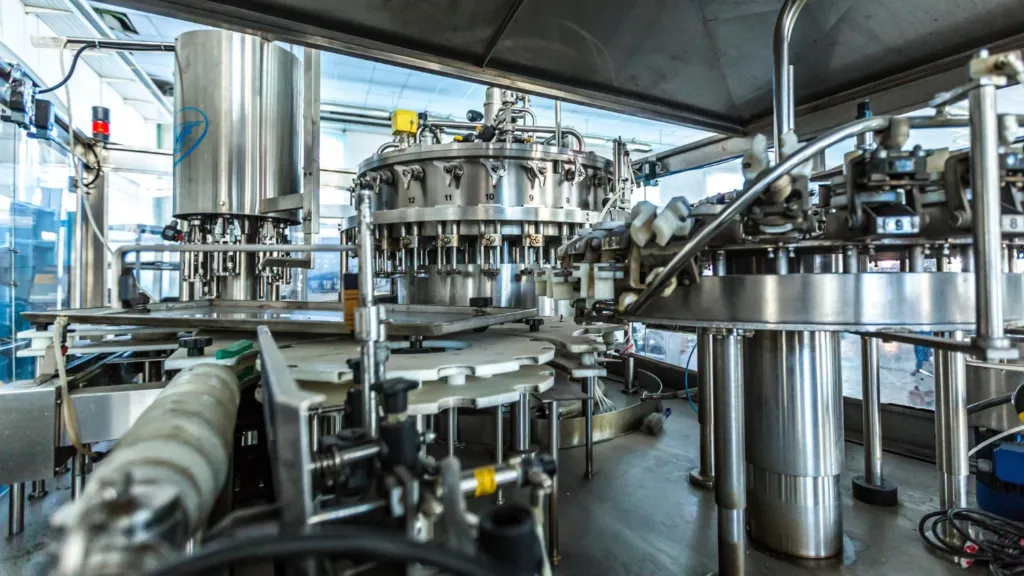
Ask ten detergent formulators where their enzymes come from and most will say “a supplier in Gujarat” and leave it there. Fair enough — you’re buying a functional ingredient, not touring a fermentation tank. But detergent enzyme manufacturing in India has a specific sequence, and knowing it changes how you read a spec sheet, question a COA, or troubleshoot a batch that isn’t performing like the last one.
This is that sequence, start to finish.
What Is Detergent Enzyme Manufacturing?
Detergent enzyme manufacturing is the process of growing selected microbial strains through fermentation, separating and purifying the enzyme they produce, and then stabilizing it into a liquid concentrate or a coated granule that survives storage inside a detergent formulation. Each stage- strain selection, fermentation, downstream processing, and formulation- directly affects how much activity actually reaches the wash.
Where It Starts: Strain Selection and Fermentation
Detergent enzymes aren’t extracted from plants or animals. They’re produced by bacteria and fungi selected specifically because they secrete large amounts of a particular enzyme without much else getting in the way. Protease and amylase, the two workhorses of laundry detergent, typically come from Bacillus species — the same genus that’s been used in industrial fermentation since the 1960s, when large-scale microbial production first made enzyme detergents commercially viable.
The strain goes into a fermenter, a controlled vessel where temperature, pH, dissolved oxygen, and nutrient feed are all managed to push the organism toward maximum enzyme output rather than just cell growth. This stage typically runs anywhere from 48 to 96 hours depending on the enzyme and strain. Get the fermentation conditions wrong feed too rich, aeration too low, temperature drifting, and you get a broth with plenty of biomass but disappointing enzyme titer. This is the part that separates a manufacturer with real in-house fermentation capability from a trader repackaging someone else’s bulk enzyme.
Downstream Processing: Turning Broth into Usable Enzyme
What comes out of the fermenter is a cloudy soup – cells, unused nutrients, metabolic byproducts, and the enzyme, all mixed together. None of that is usable in a detergent yet.
Downstream processing separates the enzyme from everything else:
- Cell separation – centrifugation or filtration removes the microbial biomass
- Concentration – ultrafiltration concentrates the dilute enzyme solution into something workable
- Purification – depending on the application’s purity requirements, further steps remove residual proteins, color bodies, and odor-causing compounds
- Stabilization – the concentrate is formulated with stabilizers (often sugars, salts, or polyols) that protect enzyme activity during storage and shipping
This is also where quality starts getting measurable. A manufacturer running proper downstream processing can tell you the enzyme’s activity in defined units, not just “high concentration” on a data sheet.
Formulating for Liquid Detergents vs. Powder Detergents
Once you have a stable, purified enzyme concentrate, the path splits depending on what it’s going into.
For liquid detergents, the concentrate is largely ready as-is, adjusted for the pH, ionic strength, and preservative system of the final formulation. The main risk here is compatibility — surfactants, bleach, and fragrance components can all reduce enzyme activity over shelf life, so compatibility testing against the actual base formula matters more than the raw activity number on the spec sheet. Antozyme Biotech’s liquid detergent enzymes are built with this compatibility testing baked in rather than left to the formulator to discover the hard way.
For powder detergents, the enzyme has to survive as a solid without degrading from moisture, heat, or contact with abrasive builders. That’s where granulation comes in. The stabilized enzyme core gets coated in layers, typically inorganic salts, waxes, and polymers such as PEG or PVA that protect it during storage and control how it releases once the granule hits wash water. Get the coating wrong and you either lose activity in the box or the granule doesn’t dissolve fast enough to do any good in a short wash cycle. This granulation step is genuinely the part most buyers never see, and it’s also where the biggest performance differences between suppliers show up. Antozyme Biotech’s granular enzyme range uses multi-layer coating specifically to hold activity through powder detergent’s rougher storage conditions.
Quality Control: What Keeps a Batch Consistent
Manufacturing capacity means nothing if batch three doesn’t match batch one. Reliable detergent enzyme manufacturers run quality control at multiple points, not just at final release:
- In-process activity checks during fermentation to catch a weak run early
- Enzyme activity assay on the finished concentrate, reported in defined units per gram
- Microbiological testing to confirm the product is free of the production organism and contaminants
- Stability testing under accelerated storage conditions to predict shelf life
- Batch-to-batch documentation COA, MSDS, and TDS – so a formulator can verify consistency without running their own lab work every time
If a supplier can’t produce a certificate of analysis with actual activity units for the batch you’re buying, that’s worth asking about before you commit a production run to it.
Why India Has Become a Detergent Enzyme Manufacturing Hub
India’s position in this industry isn’t accidental. A few things line up: established fermentation infrastructure from decades of pharmaceutical and food-enzyme production, a large domestic detergent market that gives manufacturers scale to justify investment in fermentation capacity, and export logistics that have matured enough to serve buyers well outside the country. Gujarat in particular, home to a dense cluster of chemical and biotech manufacturing, has become a center for enzyme production, including detergent enzymes.
The practical upshot for a formulator: Indian manufacturers increasingly compete on the same technical footing as established global names, often with faster turnaround on custom blends and more flexibility on order size. That’s a genuine shift from a decade ago, when “manufactured in India” mostly meant “cheaper, ask fewer questions about consistency.”
What This Means If You're Sourcing an Enzyme Supplier
Knowing the process gives you better questions to ask a potential supplier, not just a lower price to chase:
- Do they run in-house fermentation, or are they blending and repackaging bulk enzyme bought elsewhere?
- Can they show activity data per batch, not just a typical spec range?
- What’s their granulation or stabilization technology, and can they explain why it protects activity in your specific formulation?
- Do they offer application testing – fabric swatch trials, benchmarking against your current formulation- before you commit to a switch?
Antozyme Biotech runs its own fermentation, downstream processing, and granulation in-house, and backs it with an application laboratory that benchmarks enzyme performance against your actual formulation rather than a generic detergent base. If you’re evaluating a detergent enzyme manufacturer in India for a new or existing product line, that’s the difference worth checking for before you sign off on a supplier.
Frequently Asked Questions
How are detergent enzymes manufactured?
Detergent enzymes are produced by fermenting selected bacterial or fungal strains, then separating, purifying, and stabilizing the enzyme they secrete. Depending on the target detergent format, the stabilized enzyme is either finished as a liquid concentrate or coated into a granule for powder detergents.
What organisms are used to produce detergent enzymes?
Most detergent proteases and amylases are produced by Bacillus species, selected and often genetically optimized for high secretion of a specific enzyme. Cellulase and lipase production can involve fungal strains as well, depending on the enzyme and manufacturer.
Why are detergent enzymes granulated instead of used as raw powder?
Raw enzyme powder is dusty, sensitive to moisture and heat, and can lose activity quickly in storage. Granulation coats the enzyme core in protective layers that stabilize it, reduce dust, and control release during washing, which is essential for powder detergent formulations.
How long does detergent enzyme manufacturing take?
Fermentation alone typically runs 48 to 96 hours, followed by downstream processing, formulation, and quality testing. Total time from fermentation start to a release-ready batch generally falls in the range of one to two weeks, depending on the enzyme and required testing.
Is India a reliable source for detergent enzyme manufacturing?
India has developed significant fermentation and downstream processing capacity for industrial enzymes, including detergent enzymes, backed by established export infrastructure. Manufacturing quality varies by supplier, so verifying in-house fermentation capability, batch-level activity data, and application testing support is the practical way to evaluate any specific manufacturer.
Can I get a custom enzyme blend manufactured for my detergent formulation?
Yes. Manufacturers with in-house fermentation and formulation capability, including Antozyme, can develop individual enzymes or custom multi-enzyme blends built around your specific stain targets, detergent format, pH, and washing conditions. Contact Antozyme Biotech to discuss a formulation-specific enzyme solution.
Looking to move from understanding the manufacturing process to sourcing an enzyme solution? See Antozyme Biotech’s full range as a detergent enzyme manufacturer in India, or get in touch to discuss a custom blend for your formulation.