What Is Invertase?
Invertase (β-fructofuranosidase, EC 3.2.1.26) breaks sucrose into glucose and fructose. The resulting 1:1 mixture is called invert sugar. It is sweeter than sucrose, more soluble, holds moisture and resists crystallization, which is why confectionery, bakery and beverage makers rely on it. The name “invert” comes from the mixture’s optical rotation, which flips from positive to negative as sucrose splits.
Main Microbial Sources of Invertase
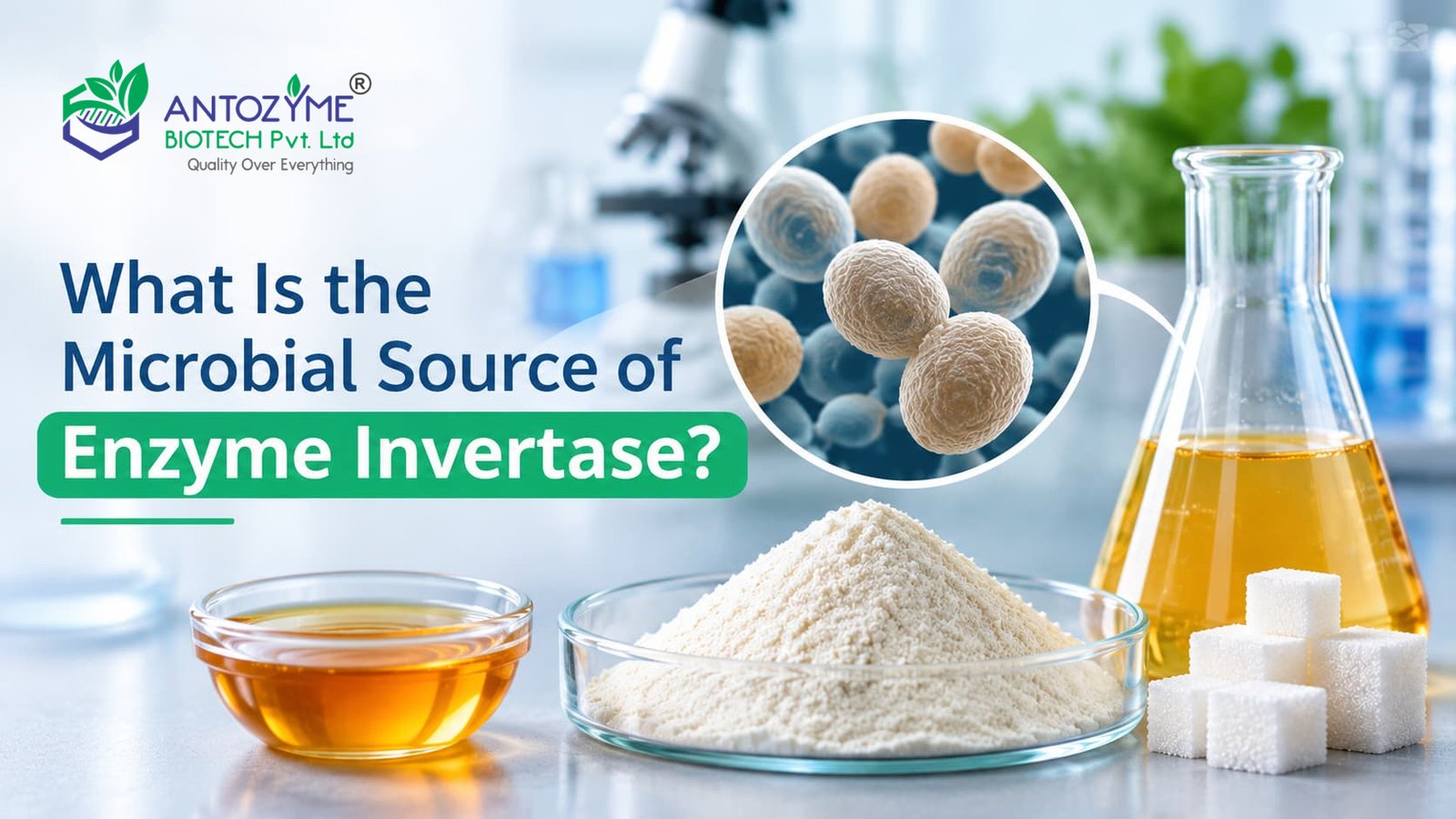
Invertase occurs in plants and even in honeybees, but commercial supply comes mostly from microbes, because fermentation is scalable, consistent and independent of the harvest season.
| Microbial Source | Type | Typical Role |
|---|---|---|
| Saccharomyces cerevisiae | Yeast | Main commercial source for invert syrup, confectionery, baking and beverages |
| Kluyveromyces marxianus, Candida utilis | Other yeasts | Alternative strains, mostly studied or used in niche products |
| Aspergillus niger, A. oryzae, A. japonicus | Filamentous fungi | Fungal invertase and fructooligosaccharide (FOS) production |
| Aureobasidium pullulans | Yeast-like fungus | High-activity strains, mainly studied for FOS |
| Zymomonas mobilis, Thermotoga maritima and some Bacillus strains | Bacteria | Mostly research; thermostable enzymes for high-temperature work |
Why Baker's Yeast Is the Main Source
- Safety record: yeast has been used in bread, beer and wine for centuries, which makes it a comfortable choice for food and pharmaceutical syrups.
- Low-cost feedstock: S. cerevisiae grows well on molasses, a by-product of sugar mills.
- Controllable yield: the yeast invertase gene (SUC2) switches on strongly when glucose runs low, so a well-run fermentation can push enzyme activity up.
- Right operating window: yeast invertase is active under mildly acidic conditions, which matches most syrups, fillings and doughs.
Fungal Invertase: Where It Fits
Aspergillus species grow in submerged fermentation and often secrete enzymes into the broth, which simplifies recovery. Some fungal β-fructofuranosidases, such as those from A. japonicus, also transfer fructose onto sucrose at high sugar concentrations and form FOS, a prebiotic fibre. That makes fungal strains attractive for specialty uses beyond plain sucrose inversion.
Fungi are also the workhorses behind related enzymes such as glucoamylase. For a closer look at how these enzymes work in practice, read our post on alpha-amylase vs glucoamylase in ethanol production.
Yeast vs Fungal Invertase: Quick Comparison
| Factor | Yeast (S. Cerevisiae) | Fungal (Aspergillus) |
|---|---|---|
| Main Use | Invert syrup, confectionery, baking, beverages | FOS production, specialty applications |
| Food-Use History | Very long | Established for several enzymes |
| Feedstock | Molasses and other sugar feeds | Various carbon sources |
| Recovery | Cells separated, enzyme released and concentrated | Biomass removed from the broth, enzyme concentrated |
| Operating Window | Mildly acidic, moderate temperature | Mildly acidic; some strains tolerate more heat |
Exact pH and temperature limits vary by strain and supplier, so always check the technical data sheet before a trial.
How Microbial Invertase Is Made
- Strain selection: a high-activity, stable strain is chosen and maintained.
- Fermentation: the strain is grown in controlled bioreactors on a sugar feed such as molasses, the same by-product that molasses and cane juice distilleries work with.
- Recovery: for yeast, the enzyme is released from the cells, for example by autolysis; for fungi, biomass is removed from the broth.
- Filtration and concentration: impurities are removed and the enzyme is concentrated.
- Formulation: the enzyme is stabilised as a liquid or powder.
- Quality control: activity assays, purity and contamination tests confirm each batch.
Where Microbial Invertase Is Used
- Confectionery: invertase in fondants and cream fillings slowly turns sucrose into invert sugar, so liquid-centre chocolates stay soft and sweets resist crystallization.
- Baking: it supplies simple sugars for yeast and helps with dough rise, flavour and moisture retention. See our baking enzymes.
- Beverages and syrups: it keeps sweetness uniform and improves sugar solubility in cold drinks.
- Sugar and fermentation: it creates fermentable sugars from sucrose for alcohol and organic acids. Explore our sugar processing enzymes.
- Pharmaceutical syrups: it improves taste and prevents crystallization.
How to Choose the Right Invertase
- Match the source to the job: yeast invertase for invert syrup, confectionery and baking; fungal enzymes for FOS or special process needs.
- Check the process window: compare your pH and temperature with the data sheet.
- Compare activity, not weight: ask for the activity units and the assay method behind them.
- Ask for documents: Antozyme lists FSSAI, GMP, Halal and ISO 9001:2015 certification on its website; confirm what applies to your market.
- Pick liquid or powder: this depends on your dosing setup and storage.
- Run a pilot trial: test on your own sucrose syrup or dough before scaling up.
Invertase from Antozyme Biotech
Antozyme Biotech is a Vadodara-based manufacturer that produces enzymes by microbial fermentation. Our invertase enzyme is derived from Saccharomyces cerevisiae and is used in food and confectionery, baking, beverages, pharmaceutical syrups and fermentation. For specifications, quotes or application advice, contact our team.
Conclusion
Yeast, above all Saccharomyces cerevisiae, is the leading microbial source of enzyme invertase, with Aspergillus fungi serving specialty needs such as FOS. Choosing the right source comes down to your process conditions, the product you are making and the supplier’s quality documents.
FAQs
What is the main microbial source of enzyme invertase?
Baker’s yeast, Saccharomyces cerevisiae, is the main commercial source. Fungi such as Aspergillus niger are the next most common.
Is invertase only produced by microbes?
No. Plants and honeybees also make invertase, but commercial enzyme supply comes mostly from microbial fermentation.
Is invertase the same as sucrase?
Not exactly. Both split sucrose, but invertase (β-fructofuranosidase) acts at the fructose end of the bond, while sucrase is an α-glucosidase, usually the intestinal enzyme.
Why is invert sugar used in confectionery?
It is sweeter, holds moisture and resists crystallization, so sweets stay soft with a smooth texture.