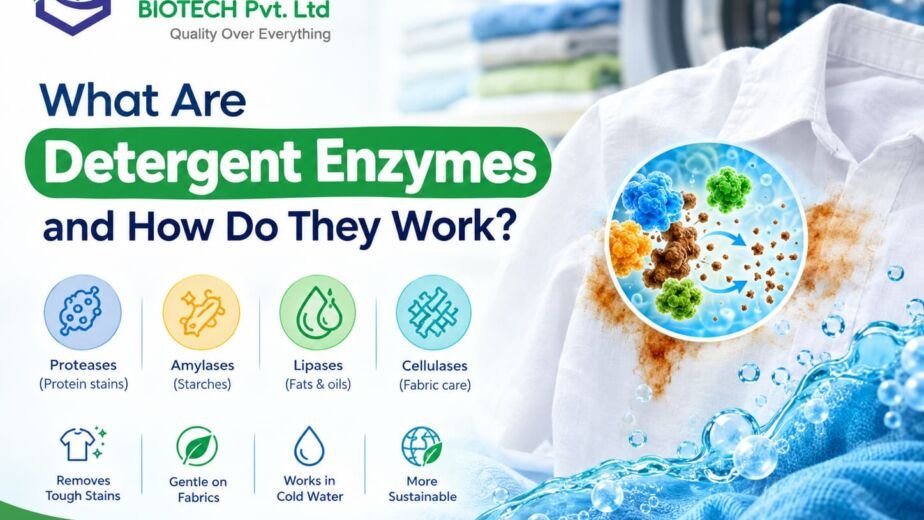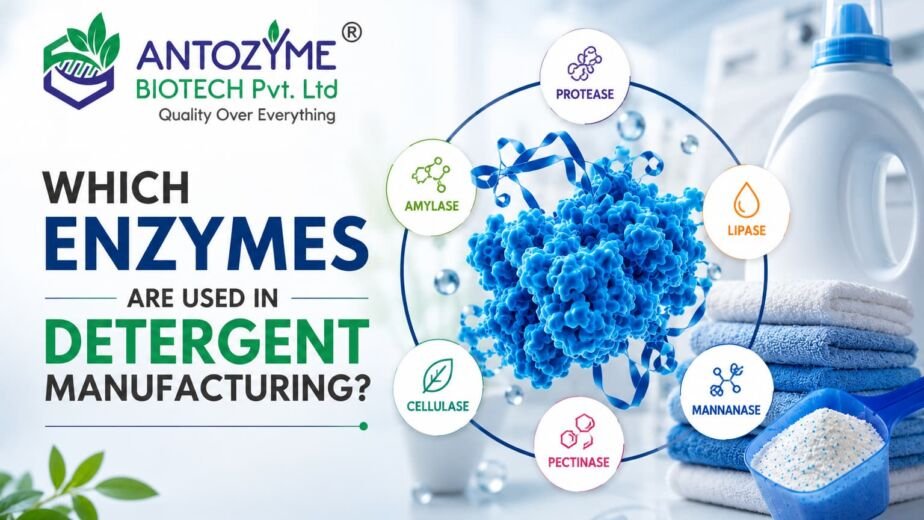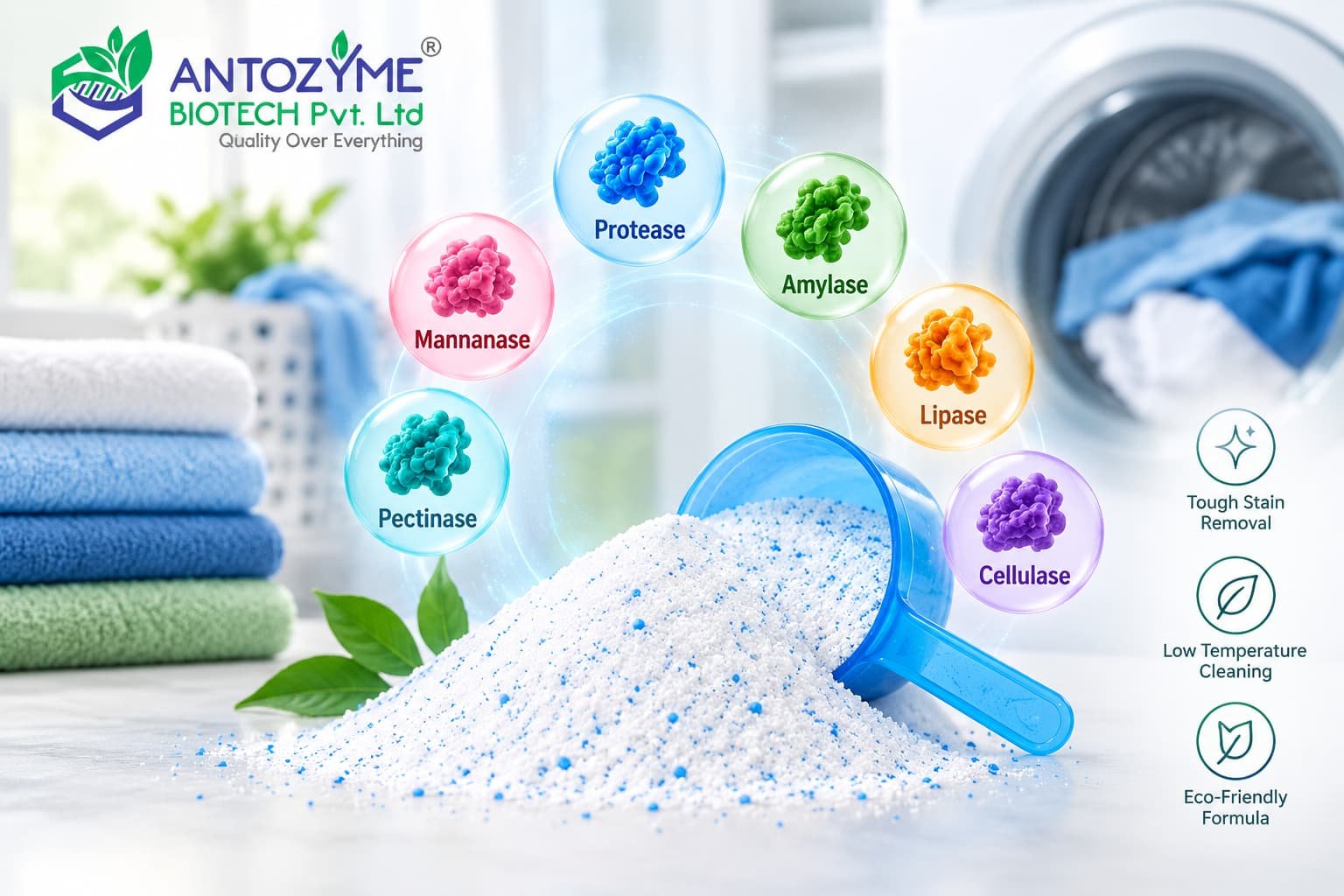
Modern laundry powders do far more than dissolve dirt in water. The best ones contain enzymes for detergent powder, biological catalysts that break down stubborn stains such as blood, sweat, grease, food and grass at low wash temperatures. Enzymes are now a core ingredient in both household and industrial detergents, driven by demand for better cleaning performance and greener formulations.
This guide explains what detergent enzymes are, the main types used in washing powders, their functions and benefits, and what to look for in a detergent enzyme supplier.
What Are Enzymes in Detergent Powder?
Enzymes are biologically active proteins that speed up chemical reactions without being consumed. In a detergent, each enzyme targets a specific type of stain and breaks it into smaller, water-soluble fragments that wash away easily.
Think of them as small, selective scissors. Surfactants lift and suspend dirt, while enzymes cut the complex stain molecules into pieces the surfactants can remove. This is why an enzyme-based powder can clean effectively even in cold or short wash cycles.
Detergent enzymes are produced by controlled microbial fermentation, then purified, concentrated and processed into a stable form for use in powders. You can explore our full detergent enzymes range for formulation-ready options.
Types of Enzymes Used in Detergent Powder
1. Protease: For Protein Stains
Protease is the most widely used enzyme in laundry detergents. It hydrolyses proteins into peptides and amino acids.
- Targets: blood, egg, milk, sweat, sauces, grass, body soils
- Benefit: removes protein-based stains that surfactants alone struggle with
- Key property: alkaline proteases stay active at the high pH of washing powders
2. Amylase: For Starch Stains
Amylase breaks starch into smaller sugars such as dextrins and maltose.
- Targets: rice, pasta, potato, gravy, cereal, chocolate and baby food
- Benefit: stops starch residues from binding other soils to the fabric
3. Lipase: For Fat and Oil Stains
Lipase hydrolyses fats and oils into fatty acids and glycerol.
- Targets: cooking oil, butter, salad dressing, lipstick, greasy collar and cuff marks
- Benefit: improves removal of oily stains, especially in cold water
4. Cellulase: For Fabric Care and Brightness
Cellulase acts on cellulose fibres in cotton and cotton blends. It removes the tiny fibre fuzz that traps dirt and dulls colours.
- Benefit: restores softness, colour brightness and a fresh look
- Additional value: helps reduce pilling on cotton garments over repeated washes
5. Mannanase: For Gum-Based Stains
Mannanase breaks down mannan, a polysaccharide found in many food thickeners.
- Targets: ice cream, sauces, dressings, toothpaste, cosmetics and other stabiliser-rich stains
- Benefit: tackles stains that proteases and amylases cannot
6. Pectinase (Pectate Lyase): For Fruit and Vegetable Stains
Pectinase degrades pectin, which acts as a natural “glue” in fruit and vegetable stains.
- Targets: fruit juices, jams, vegetables and plant-based soils
- Benefit: helps loosen particulate soils from fabric fibres
Quick Comparison Table
| Enzyme | Stain Type | Typical Targets |
|---|---|---|
| Protease | Protein | Blood, egg, milk, sweat |
| Amylase | Starch | Rice, pasta, potato, gravy |
| Lipase | Fats & oils | Butter, oils, lipstick |
| Cellulase | Cellulose (fabric care) | Cotton fuzz, dullness |
| Mannanase | Gums | Sauces, ice cream, cosmetics |
| Pectinase | Pectin | Fruit and vegetable stains |
Functions of Enzymes in Detergent Powder
- Stain breakdown: they break down organic stains at a molecular level.
- Low-temperature cleaning: they work effectively at 20–40°C, so garments can be washed in cooler water.
- Synergy with surfactants: they help reduce reliance on harsher chemicals.
- Fabric care: cellulase helps maintain fabric appearance and colour.
- Multi-stain action: enzyme blends give broad-spectrum cleaning in a single wash.
Benefits of Using Enzymes in Detergent Powder
- Superior stain removal: better results on tough, dried-in and mixed stains.
- Energy savings: lower wash temperatures mean less energy used per cycle.
- Eco-friendly cleaning: enzymes are biodegradable and let manufacturers reduce phosphates and other harsh chemicals.
- Lower dosage: a small amount of enzyme delivers a large cleaning effect.
- Gentle on fabrics: less need for aggressive mechanical or chemical action.
- Better value: improved performance without a big rise in formulation cost.
Why Granulated Enzymes Matter for Detergent Powder
Enzymes are proteins, and they can lose activity when exposed to high temperature and moisture. That is why powder detergents use granulated or encapsulated enzymes. Granules protect the enzyme during storage and blending, reduce dust and help ensure activity is retained on the shelf until the wash begins.
Antozyme’s powder enzymes are developed to improve cleaning efficiency in both household and industrial detergents, with a focus on removing tough stains and delivering environmental benefits.
How to Choose the Right Enzymes for Your Detergent Powder
When selecting enzymes, evaluate these factors:
- Activity and stability: check performance across your formulation’s pH range and storage conditions.
- Compatibility: confirm the enzyme works with your surfactants, builders, bleach systems, and other ingredients.
- Wash conditions: match the enzyme to the wash temperature and water hardness of your target market.
- Form: choose granulated or powder-grade enzymes suited to dry detergent blending.
- Blend vs. single enzyme: multi-enzyme blends offer broader stain coverage.
- Supplier reliability: look for consistent batch quality, technical support, and regulatory documentation.
Choosing a Detergent Enzyme Manufacturer in India
India’s detergent industry is growing quickly, and formulators need a supplier that offers consistent quality, competitive pricing and technical support. A dependable detergent enzyme manufacturer in India should provide:
- In-house design and manufacturing capability
- A wide range of individual enzymes and multi-enzyme blends
- Application support for formulation and trials
- Export-ready quality and documentation
Antozyme Biotech develops high-performing individual and multi-enzyme products with end-to-end, in-house manufacturing. Visit our detergent enzyme manufacturer in India page to see how we support detergent brands, and explore our wider product range for other industries.
Conclusion
Enzymes are among the most effective ingredients for modern detergent powders. Protease, amylase, lipase, cellulase, mannanase and pectinase each target a different stain type, and together they deliver strong cleaning at lower temperatures with less environmental impact. Choosing the right enzyme type, form and supplier is the key to a high-performing powder.
Looking for high-quality enzymes for your detergent powder formulation? Contact Antozyme Biotech for samples, technical data sheets and bulk pricing.
FAQs
Which enzymes are used in detergent powder?
The most common are protease, amylase, lipase and cellulase. Mannanase and pectinase are also used for specific stains.
Which is the most important enzyme in detergent?
Protease is the most widely used because protein stains such as blood, egg and sweat are so common.
Do enzymes work in cold water?
Yes. Many detergent enzymes are designed to work well at low wash temperatures, which saves energy.
Are detergent enzymes safe for fabrics?
Yes. They target stain molecules, and cellulase actually helps maintain cotton fabric appearance.
Why are enzymes granulated in washing powder?
Granulation protects enzyme activity from heat and moisture during storage and reduces dust during handling.
Are enzymes in detergent eco-friendly?
Enzymes are biodegradable and help reduce the need for harsh chemicals and high-temperature washing.
Can I get custom enzyme blends for my detergent?
Yes. Antozyme Biotech offers individual enzymes and multi-enzyme blends suited to different formulations.