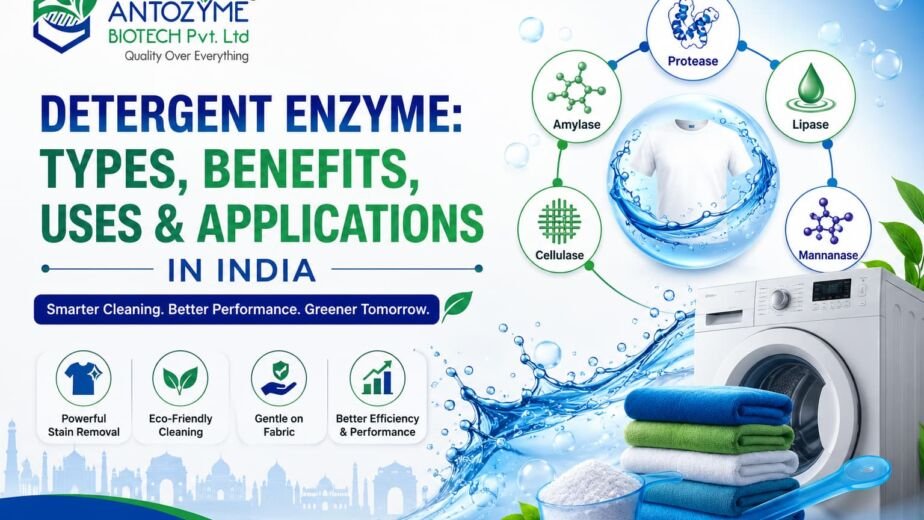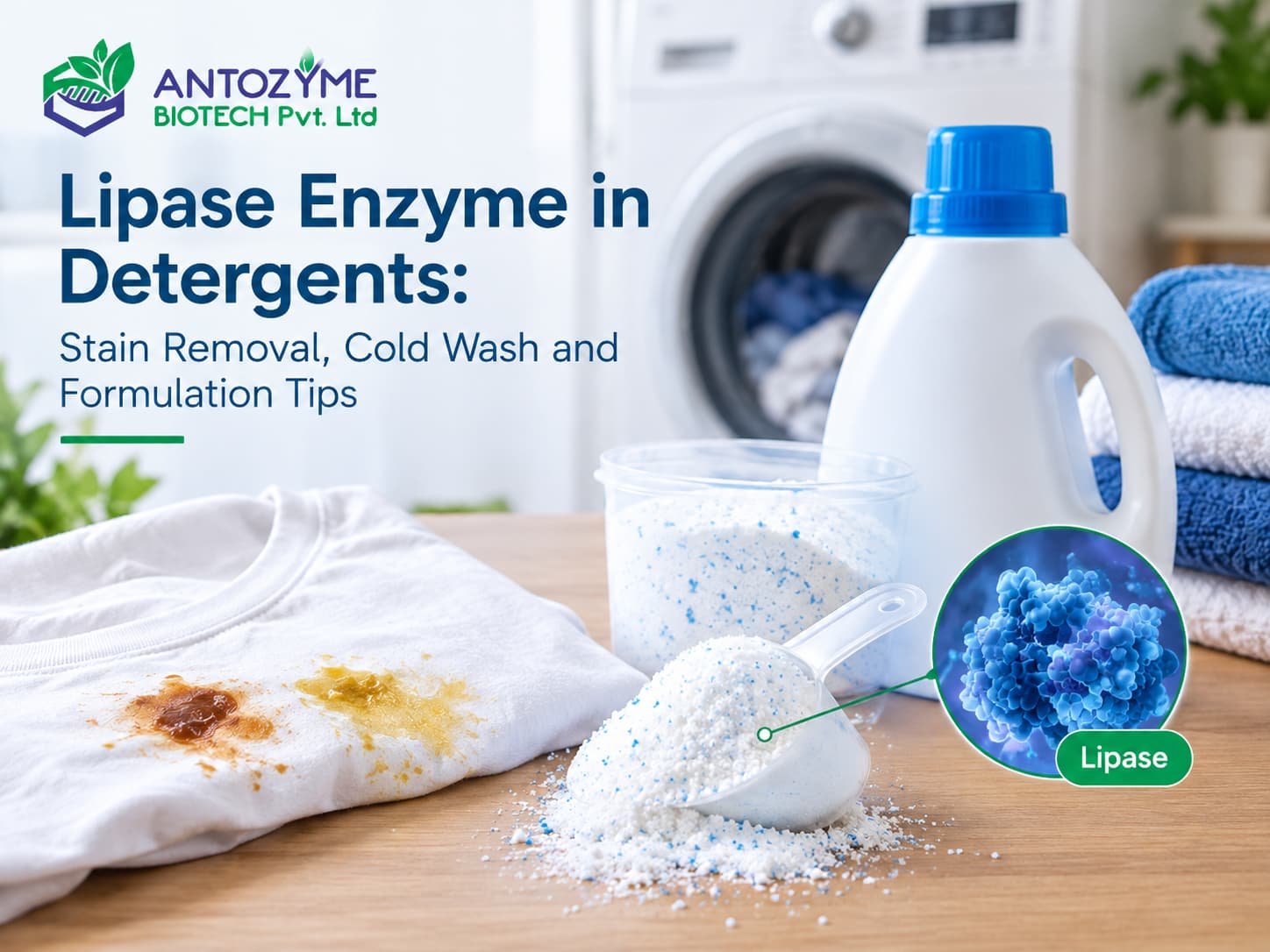
Cooking oil, butter, salad dressing, lipstick and the greasy ring on a shirt collar share one problem: they are fats, and fats are the stains that surfactants alone remove least well in cool water. That is the job of lipase.
This guide explains how lipase enzyme in detergents works, which stains it removes, how it performs in a cold wash, and how to formulate it in liquids, powders and dishwash products. It is written for formulators, R&D teams and brand owners. As more brands launch enzyme based detergents in India, lipase is moving from a premium add-on to a standard part of the enzyme system, so it helps to know where it adds value and where it can cause trouble.
The short version
- Lipase breaks fats and oils into fatty acids and glycerol, which wash away more easily.
- It helps most in cold and warm washes, where grease is hardest to lift.
- It works best alongside protease and amylase, not on its own.
- It needs care in liquids, where protease can digest it and fragrance esters can be affected.
What Lipase Does in a Detergent
Lipase is a hydrolase that cuts the ester bonds in triglycerides, the main component of edible fats and oils. The result is fatty acids and glycerol, which are more soluble and easier for surfactants to carry away. Surfactants lift and suspend oily soil, while lipase changes the soil itself so less of it stays behind.
| Stain Type | Examples | What Lipase Does |
|---|---|---|
| Cooking Fats and Oils | Ghee, butter, frying oil, curry grease | Breaks down triglycerides into fatty acids and glycerol, helping remove oily stains. |
| Dressings and Sauces | Mayonnaise, salad dressing, oily gravies | Breaks down fats that can bind other soil components to fabric. |
| Cosmetic and Skin Soils | Lipstick, body oils, collar and cuff marks | Helps loosen oily residues that accumulate on clothing over repeated wear and washing. |
| Mixed Food Stains | Chocolate, ice cream, fatty sauces | Works alongside protease and amylase to help remove fat, protein, and starch components. |
Lipase also helps with a quieter problem: fat residue that builds up on cotton and polyester over many washes and carries a stale smell. Regular lipase action can reduce that build-up, which is one reason premium detergents often list it.
The lipase types used in detergents differ in how they behave at wash pH and temperature. Antozyme supplies fungal and alkaline lipase in liquid and powder forms, so you can match the grade to your base. Check the activity, pH range and temperature profile on the technical data sheet (TDS) before you choose.
Lipase in a Cold Wash
Fats are the hardest soils to remove in cool water. At low temperatures, fats stay semi-solid and cling to fibres, so surfactants alone struggle. Lipase attacks the fat at the molecular level, which is why it is one of the enzymes most associated with cold-wash performance.
Cold and lukewarm washing is common in Indian households, especially with hand wash and semi-automatic machines, and brands that claim stain removal without hot water need enzymes that stay active in those conditions. Lipase also supports the energy-saving story, since effective cleaning at lower temperatures means less water heating.
A few points keep expectations realistic:
- Performance depends on the grade. Lipases differ in how active they are at 20 to 30°C. Ask your supplier for the temperature profile and test at your real wash temperature.
- Contact time matters. A short machine cycle or a quick hand wash gives the enzyme less time than a long soak.
- Water hardness and pH change results. Test in the water your market actually has, not only in soft lab water.
- Do not over-promise on the label. Claims about cold-wash performance should rest on your own swatch tests.
Formulation Tips for Lipase in Detergents
If you are developing an enzyme laundry product in India, these points matter most. The same page walks through the wider enzyme selection process.
| Format | What to Watch | Practical Tip |
|---|---|---|
| Liquid Detergent | Protease can digest lipase, while anionic surfactants and some preservatives may reduce enzyme activity. | Use a stabilizer system designed for the enzyme blend. Measure lipase activity over time rather than monitoring protease alone. |
| Powder Detergent | Moisture, alkalinity, and bleach can damage unprotected enzymes. | Use appropriately granulated lipase and protect it from moisture and direct contact with bleach systems. |
| Dishwashing Liquid or Gel | Surfactant combinations and grease loads differ from those in laundry detergents. | Test lipase separately in the intended dishwashing formulation. Results from laundry detergent bases may not transfer directly. |
Five habits help in any format:
- Match the lipase to your wash pH. Laundry powders give an alkaline wash, so choose a lipase that is active there.
- Check fragrance. Lipase can act on ester-based fragrance ingredients, so test scent stability alongside enzyme activity.
- Compare cost-in-use, not price per kg. Activity differs between grades, so calculate the cost per wash at the dose that performs.
- Dose by tested activity. Start from the supplier’s recommended range and tune it with swatch tests on oily stains.
- Test on your own base. General data is a starting point only.
For liquid formats, our liquid detergent enzymes page covers the individual and blended options, and for powders see granular detergent enzymes.
Lipase in Multi-Enzyme Blends
Lipase rarely works alone. Real stains mix fat with protein and starch, so lipase is normally part of a system. Each partner covers what the others cannot.
| Enzyme | Main Target | How It Works with Lipase |
|---|---|---|
| Protease | Blood, egg, milk, sweat | Removes protein-based soil that can trap fat in mixed stains. In liquid formulations, compatibility must be managed because protease may degrade lipase. |
| Amylase | Rice, gravy, potato, chocolate | Breaks down starch residues associated with oily food stains, helping lipase target the fat component. |
| Cellulase | Cotton fuzz, dullness | Helps remove surface fuzz and improve fabric appearance, supporting soil release and colour brightness. |
| Lipase | Fats, oils, grease | Breaks down fats and oils into smaller components that are easier to remove during washing, including under suitable cool-wash conditions. |
A common setup is protease plus amylase and lipase for a standard detergent, with cellulase added for fabric care in a premium product. Our ready blends include 4-in-1 and 6-in-1 options in both liquid and granule forms, and a custom blend is possible when your base needs a specific balance.
Lipase in Dishwash Products
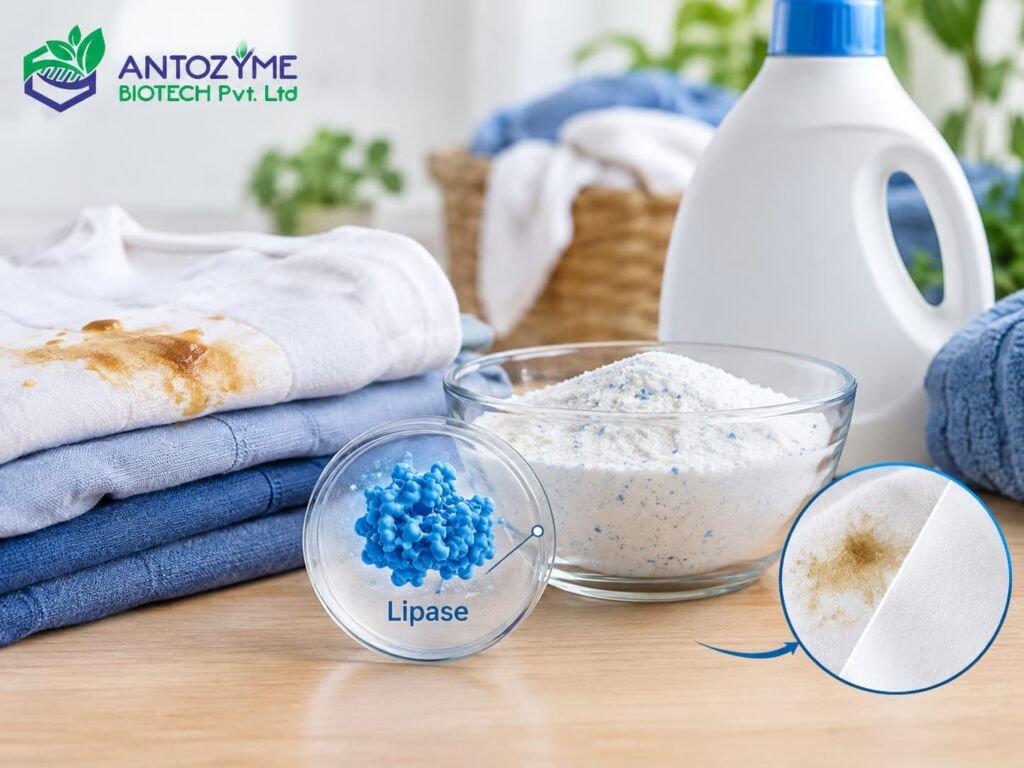
Shoppers searching for the best bio enzyme dishwasher detergent want one thing: grease gone without scrubbing. For a manufacturer, that translates into an enzyme system that handles protein, starch and fat on plates, pans and glassware.
Protease and amylase carry most of the load on dried-on food, and lipase can add help on greasy residue, particularly in lower-temperature cycles. Dishwash bases differ from laundry bases, with different surfactants, more alkalinity in some automatic products, and a heavier grease load, so each format needs its own testing. If you want lipase in a dishwash product, ask your supplier for a grade and a stability test result for that specific base.
For brand owners, “bio enzyme” works as a positioning claim only when the enzyme level and performance can be shown, so keep your swatch or plate test data for the claim file.
Sourcing Lipase and Detergent Enzymes in India
A supplier who understands your base helps more than one who only quotes a price. When you compare options, look for:
- Declared activity and the assay method
- pH and temperature profile, especially at cold-wash temperatures
- Stability data in a base like yours, with a certificate of analysis (COA) for every lot
- Liquid and granule forms, and the option of a custom blend
- Technical help during trials, including swatch tests
How Antozyme Can Help
As a detergent enzymes manufacturer in India, Antozyme supplies individual enzymes and multi-enzyme blends for laundry and dishwash formulations, backed by an application laboratory for activity analysis and fabric swatch testing. Brands that want one source for several enzymes can also work with us as an enzyme distributor in India, with food, textile, feed and other industrial enzymes alongside the detergent range. You can learn more about the company on our About Us page.
Lipase is also used well beyond detergents. If your portfolio includes supplements or health products, see our range of digestive enzymes in India for nutraceutical applications.
Developing a lipase-based detergent? Contact our technical team with your base type, pH, target wash temperature and stain priorities. We will suggest a starting enzyme system and arrange samples for your trials.
Frequently Asked Questions
What does lipase do in a detergent?
Lipase breaks fats and oils into fatty acids and glycerol, which are easier to wash away. It helps remove cooking oil, butter, dressings, lipstick and greasy collar marks.
Does lipase work in cold water?
Many lipases stay active at low wash temperatures, which is why they are linked to cold-wash performance. The exact range depends on the grade, so check the temperature profile and test at your real wash temperature.
Can lipase be used together with protease?
Yes, most modern detergents combine them. In liquids, protease can digest lipase, so the formula needs a stabilizer system and activity testing for each enzyme over time.
Is lipase suitable for both liquid and powder detergents?
Yes, in the right form. Use liquid lipase for liquid detergents and granulated lipase for powders, and test stability in your own base.
Is lipase safe for fabrics?
Lipase acts on fats, not on cotton or synthetic fibres. As with all detergent enzymes, correct dosage and safe handling in the plant matter.
Can lipase be used in dishwash products?
Lipase acts on fats, not on cotton or synthetic fibres. As with all detergent enzymes, correct dosage and safe handling in the plant matter.